
Why is water leaking through my ceiling after a storm in Lakewood
A ceiling leak after a storm almost never starts where the stain shows. Water travels along the deck before it drips — so the hole is usually above and away from the stain.
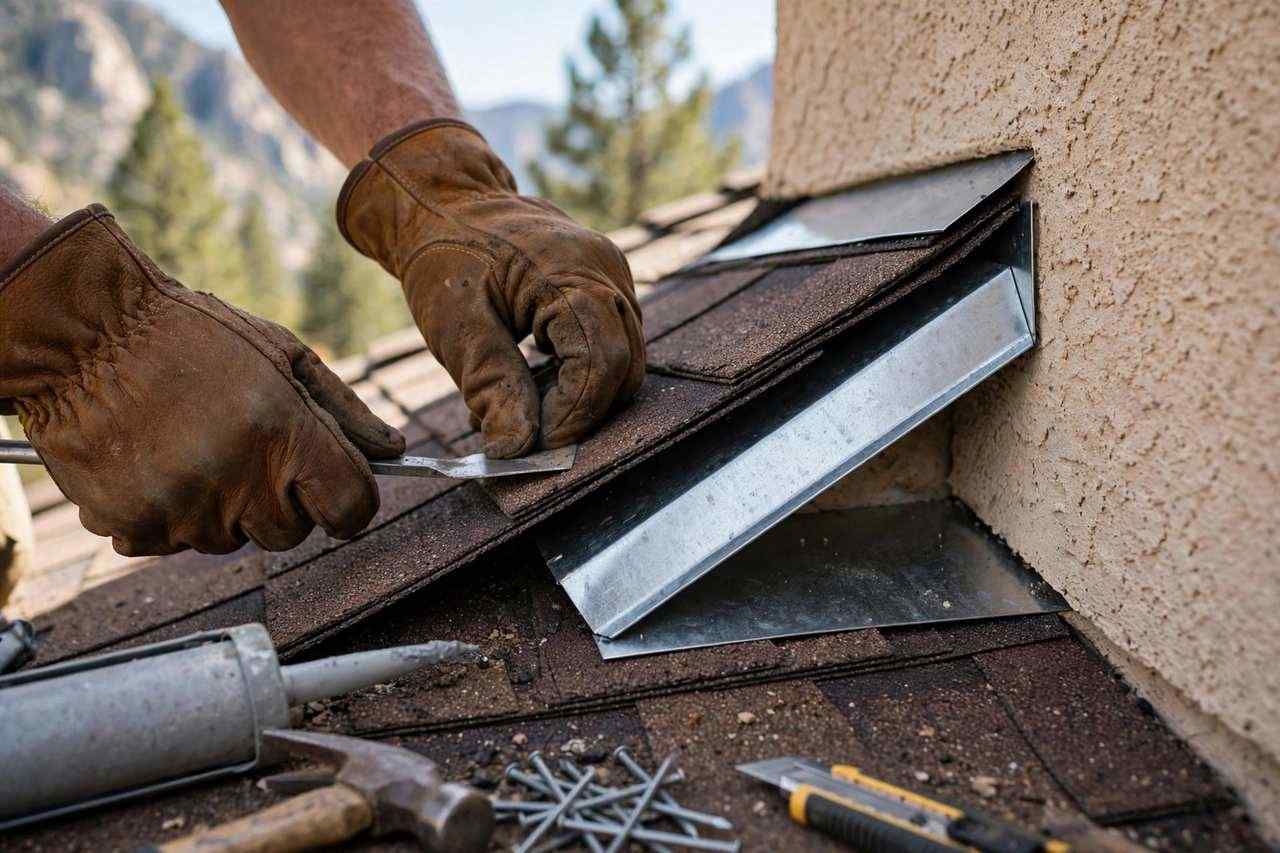
Water coming through the ceiling is the most alarming roof symptom, and the most misleading. The stain on the ceiling is where the water came out, not where it got in. Between the two, it travelled along decking, rafters, and insulation, sometimes for metres. This guide explains the five things that actually fail on Lakewood roofs during a storm, why the water shows up far from the hole, and how to stop it.
Why is water leaking through my ceiling after a storm in Lakewood?
The short answer is that a storm found a weakness in the roof system and water got under the covering. The longer answer is that the weakness is usually one of five things, and finding which one it is — rather than just patching the ceiling — is the whole job. A ceiling repair without a roof repair is a stain that comes back with the next storm.
The five things that actually fail on Lakewood roofs during a storm
- Flashing. The metal at chimneys, valleys, walls, and skylights is the most common failure point. Flashing that has lifted, cracked, or corroded lets wind-driven rain straight under the shingles. On a 1970s Lakewood home, the flashing is often as old as the roof — or older.
- Pipe boots and vents. The rubber boot around a vent pipe dries and cracks with age and high-altitude UV. A cracked boot leaks every time it rains, and the leak shows up as a stain near the vent — or far from it, if the water travels.
- Valleys. Valleys carry the most water on the roof, and they fail first when the valley metal is damaged, the shingles are cut wrong, or debris has dammed the flow. A valley leak in a storm is often a heavy leak.
- Lifted or missing shingles. Wind lifts tabs and tears shingles at the nail line, and hail fractures them. The opening is small, but wind-driven rain finds it. See our guide to wind-lifted shingles.
- Ice dams. In winter, the failure is not rain but meltwater: snow melts on the upper roof, refreezes at the eaves, and the dam forces water back under the shingles. Our roof ventilation and ice dams page explains the mechanism, and our guide to preparing your roof for winter covers prevention.
Why the water shows up far from the actual hole
Water obeys gravity, but it also follows the path of least resistance — and on a roof, that path is along the decking, down a rafter, across insulation, and finally through the ceiling at the lowest point it can reach. A leak at a chimney flashing on the north slope can show up as a stain on the south side of a room. A valley leak can show up two rooms away. That is why the stain is a clue, not a diagnosis, and why finding the entry point is an inspection job, not a guess from inside the house.
The other reason the stain misleads is timing. Hail damage rarely leaks immediately: a bruised shingle dries, cracks, and lets water in over the following months. A ceiling stain that appears in November may be the result of a hailstorm in June. That is why a post-storm inspection matters even when nothing is leaking yet — see our guide to spotting hail damage.
How to stop a ceiling leak right now
Contain the water first: a bucket under the drip, plastic sheeting over furniture, and towels at the base of the wall. If the ceiling is bulging with water, let it out in a controlled way — a small hole in the lowest point of the bulge, with a bucket underneath — because a bulging ceiling can collapse. Do not climb onto the roof in a storm. The temporary fix is a tarp on the outside, over the ridge, put on only in safe, dry conditions. Our guide to temporarily patching a roof leak walks through it step by step.
Then call a roofer. The permanent fix needs the entry point found and the failure — flashing, boot, valley, shingle, or ice dam — repaired properly. In Lakewood, a repair of 100 square feet or more needs a permit before tear-off, and the City closes out jobs with photo inspections through eTRAKiT. See our roof leak repair page.
What to watch out for
- Repairing the ceiling before the roof. A patched ceiling under a leaking roof is a stain that comes back.
- Assuming the stain marks the leak. The entry point is usually above and away from the stain. Find it before you repair anything.
- Ignoring a small stain. A small stain is a leak that has already been running long enough to show inside. It will not stay small.
- Sealing from inside the attic. Sealant on the underside of wet decking does not stop the leak and makes the permanent repair harder.
- Waiting for the next storm to confirm it. The next storm will confirm it, and the damage will be worse.
Does insurance cover ceiling leaks from storms in Lakewood?
Most Colorado homeowner policies cover sudden storm damage, minus your deductible, when the leak is tied to a specific storm event — hail, wind, or a falling tree. A leak caused by age, wear, or a long-neglected flashing failure is a maintenance question, not a claim. The distinction is the inspection and the documentation: dated photos, a written scope, and a storm date. Under SB 12-038, a roofer may not pay, waive, or rebate any part of your deductible, and may not negotiate your claim. See our guide to filing a storm damage claim for the full process, and our storm damage roof repair page.
When to call a professional
Call a roofer as soon as water is coming through the ceiling, even if the drip has stopped. A leak that stops when the rain stops is still a leak, and the entry point is still open for the next storm. Call (720) 817-3348 and we will inspect the roof, find the entry point, and scope the repair. Roof Authority LLC works on residential roofs across Lakewood, including Eiber and Morse Park.
Frequently Asked Questions
Why is water leaking through my ceiling after a storm?
Usually because flashing, a pipe boot, a valley, or a lifted shingle failed during the storm and let water under the covering. The water then travels along the decking before it drips through the ceiling, so the stain is rarely directly below the entry point.
Is a ceiling leak an emergency?
Yes, if water is actively coming in, the ceiling is bulging, or you see a sagging ceiling or cracked drywall. Contain the water, stay out of the affected room if the ceiling is sagging, and call a roofer.
How do I find where a roof leak is coming from?
Follow the water uphill from the attic with a flashlight, looking for the entry point above the stain. Finding the entry point reliably is an inspection job, because water travels along decking and rafters.
Does insurance cover a ceiling leak from a storm in Lakewood?
Most Colorado homeowner policies cover sudden storm damage, minus your deductible, when the leak is tied to a specific storm event. A leak caused by age or wear is a maintenance question, not a claim.
Can I patch a ceiling leak myself?
You can contain the water and, only in safe, dry conditions, tarp the roof from the outside. The permanent fix needs the entry point found and repaired by a roofer.
Get help with Roofing in lakewood
If water is coming through your ceiling, call (720) 817-3348. We will inspect the roof, find the entry point, and scope the permanent repair.
Roof Authority LLC is based at 200 Union Blvd, Lakewood, CO 80228, and works Monday to Saturday, 7:00 AM to 5:00 PM. Phone is the way to reach us.