
How to temporarily patch a roof leak before a roofer arrives
A temporary patch buys time, not a repair. Keep the water out from the outside, stay off a wet roof, and get a roofer in for the permanent fix.
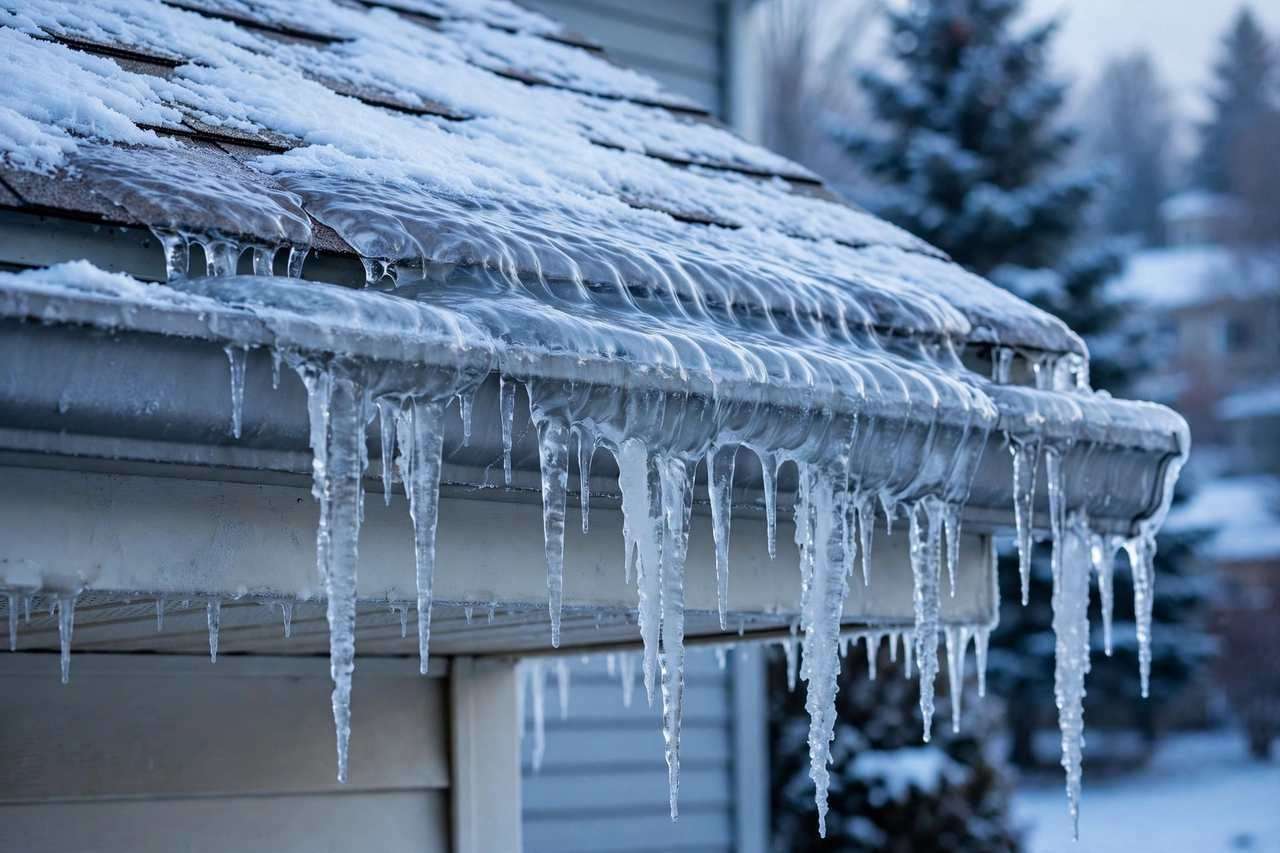
Water coming through the ceiling is urgent, but the fix that stops it is usually simple: a tarp on the outside, over the ridge, so water runs off it. This guide covers when to stay off the roof entirely, what you need for a temporary patch, how to put one on safely, and the mistakes that turn a small leak into a bigger repair.
Safety First: When to Stay Off the Roof
Stay off the roof when it is wet, when it is dark, when the wind is up, when the pitch is steep, or when you cannot see what you are stepping on. A wet shingle is as slick as ice, and a leak-weakened deck can give way underfoot. If any of those apply — and during a Lakewood storm, several usually do — the temporary fix happens from inside the house, not on the roof.
From inside, the job is containment: a bucket under the drip, plastic sheeting over furniture, and a towel at the base of the wall where water is running. If the ceiling is bulging with water, do not ignore it: a bulging ceiling can collapse. Poke a small hole in the lowest point of the bulge with a screwdriver, with a bucket underneath, to let the water out in a controlled way. Then call a roofer. If you see a sagging ceiling, cracked drywall, or a door that suddenly will not close, stay out of that room until a professional has looked at it.
What You'll Need for a Temporary Roof Leak Patch in Lakewood CO
For a ground-level exterior patch — the only kind a homeowner should attempt — you need a heavy-duty tarp large enough to cover the damaged area and extend over the ridge, roofing nails or screws with large washers, a hammer or drill, and a ladder tall enough to reach the eave safely. Inside, you need buckets, plastic sheeting, towels, and a flashlight for the attic check.
For an interior-only stopgap, you need a bucket, plastic sheeting, and a way to catch the water where it is coming in. That is all the inside fix is: containment, not repair. The real patch goes on the outside, and if the outside is not safe to reach, the inside fix is the right call until the roofer arrives.
Step-by-Step: How to Temporarily Patch a Roof Leak
- Find the leak path from inside. Go into the attic with a flashlight and follow the water uphill. The entry point is usually above where the ceiling stain shows, because water travels along decking and rafters before it drips.
- Contain the water inside. Bucket under the drip, plastic over anything valuable, and a small controlled hole in a bulging ceiling if needed.
- Wait for safe conditions. Do not go up in rain, wind, or darkness. A tarp put on badly in bad weather is worse than no tarp.
- Unroll the tarp over the ridge. The top edge goes over the ridge so water runs off the tarp, not under it. The tarp must extend past the damaged area on all sides.
- Secure it at the edges, not the middle. Nail or screw through the tarp’s reinforced edges into solid decking, with large washers. Do not nail through the middle of the tarp, and do not nail into the damaged area itself.
- Call a roofer. A tarp is a 30- to 90-day stopgap at most, according to published market guidance. It is not a repair, and it will fail in the next wind event if it is left up.
Common Mistakes to Avoid
- Tarping from the inside. Plastic stapled to the attic side traps water in the deck. The tarp belongs on the outside, over the ridge.
- Nailing through the damaged area. Every nail is a new hole. Nail the tarp’s edges into sound decking.
- Using a tarp that is too small. If the tarp does not extend past the damage on all sides and over the ridge, water runs under it.
- Caulking or sealing from inside the attic. Sealant applied to the underside of wet decking does not stop the leak and makes the permanent repair harder.
- Waiting out the storm without calling anyone. A roofer needs to be in the queue before the storm ends, not after every other damaged roof in Lakewood is already booked.
When to Call a Professional
Call a roofer as soon as water is coming in, even if the patch is holding. A temporary patch buys days, not months, and the permanent fix — new flashing, a repaired valley, replaced shingles, or a decking repair — needs an inspection to scope properly. In Lakewood, a repair of 100 square feet or more needs a permit before tear-off, and the City closes out jobs with photo inspections through eTRAKiT, so the permanent repair is a permitted job, not a patch.
Roof Authority LLC handles roof leak repair and emergency roof repair across Lakewood, including Belmar and Eiber. Call (720) 817-3348. If the leak is storm-related, read our guide to filing a storm damage claim before you file.
Frequently Asked Questions
How do I temporarily patch a roof leak in Lakewood?
Contain the water inside with a bucket and plastic sheeting, then, only in safe, dry conditions, lay a heavy-duty tarp over the ridge and past the damaged area on all sides, securing its edges into sound decking. A tarp is a 30- to 90-day stopgap, not a repair.
Is it safe to go on my roof to patch a leak?
No, not when the roof is wet, dark, windy, steep, or when the deck may be weakened. Stay off the roof and contain the water from inside until a roofer arrives.
How long does a tarp last on a roof?
Published market guidance treats a tarp as a 30- to 90-day stopgap. It will fail in the next wind event if left up, so book the permanent repair promptly.
Why is my ceiling leaking if the hole is somewhere else?
Water travels along decking and rafters before it drips, so the ceiling stain usually shows below and away from the actual entry point. Finding the entry point is the roofer inspection job.
Do I need a permit to repair a roof leak in Lakewood?
Lakewood requires a permit before tear-off on any re-roof or repair of 100 square feet or more. Small leak repairs below that threshold do not need one.
Get Help with Roofing in Lakewood
If water is coming through your ceiling, call (720) 817-3348. We will talk through the temporary steps, inspect the roof, and scope the permanent repair.
Roof Authority LLC is based at 200 Union Blvd, Lakewood, CO 80228, and works Monday to Saturday, 7:00 AM to 5:00 PM. Phone is the way to reach us.